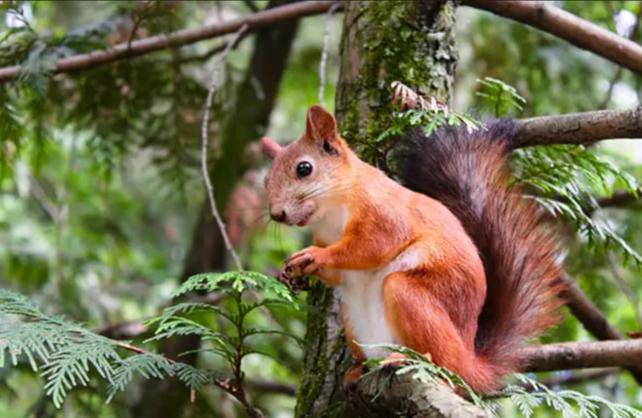
“Hɛɬ toq tʊwa”, the First Nations Klahoose designation for Squirrel Cove, translates to “I am from Squirrel Cove. Hundreds of years ago Red Squirrels were obvious a common occupant of the ancient woods surrounding the coves and inlets of what became later known as Cortes Island. The area has been traditionally used by First Nations for centuries and the use and health of the Island’s resources remain vital to their cultural and economic well-being.
The Klahoose have a long history of use, occupation, and management of the island and surrounding areas. Their occupancy long predated the onset of European colonization. Squirrel Cove was one of the summer places Klahoose had used prior to contact, where each spring they harvested shellfish and berries and planted and harvested gardens prior to returning to Toba in the fall.
A succession of non-indigenous people have come through the bay: European explorers, surveyors, whalers, miners, Japanese loggers with horses all came, extracted and left. Then came the settlers as early as 1866, preempting land the receiving crown grants which designated ownership whether occupied by First Nations peoples or not. There were no roads, no buildings and no steamship service to or from civilization. There were no gas engines, and transportation was by rowboat or dugout canoe. The squirrels were happy. Not so much now. In fact, we’ve never seen nor heard then sentinel chirping of a red Squirrel in Squirrel cove.
Red Squirrels prefer to live in ancient, intact forests. They still occupy the surrounding second and third growth forests, just nothing near Squirrel Cove. My previous blog describes an encounter with a red squirrel in Von Donop Inlet: https://boatingongreatnorthern.org/2026/07/27/von-donup-inlet-an-extraordinary-setting-amidst-idyllic-locales/
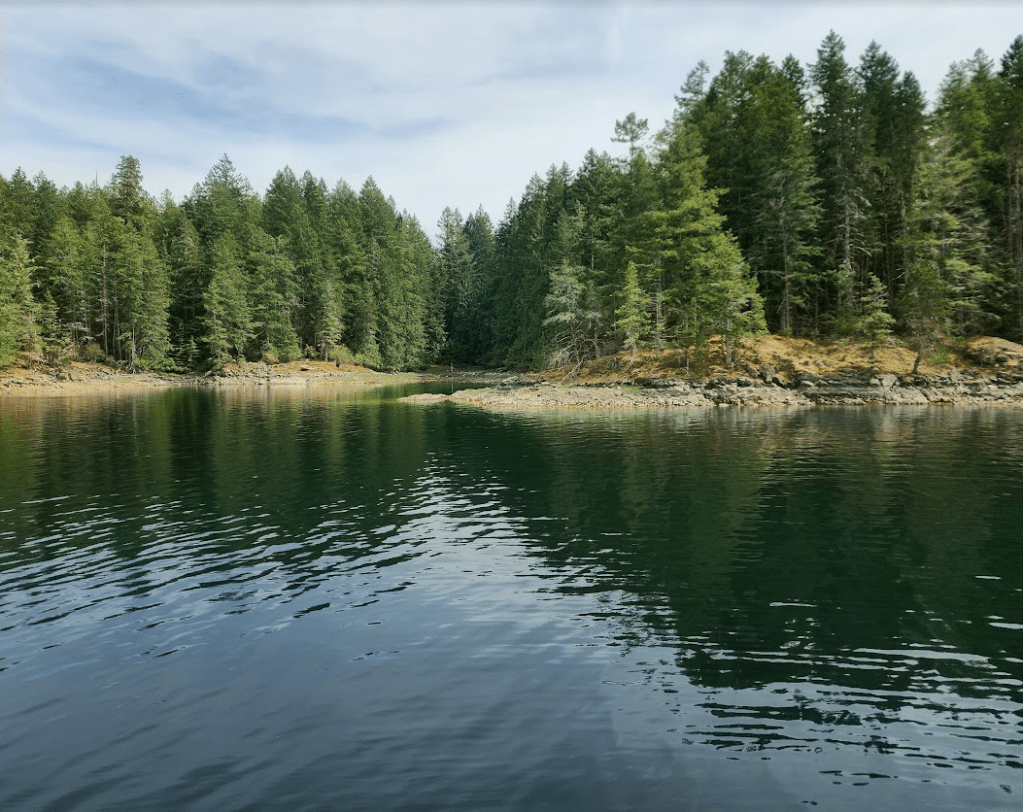
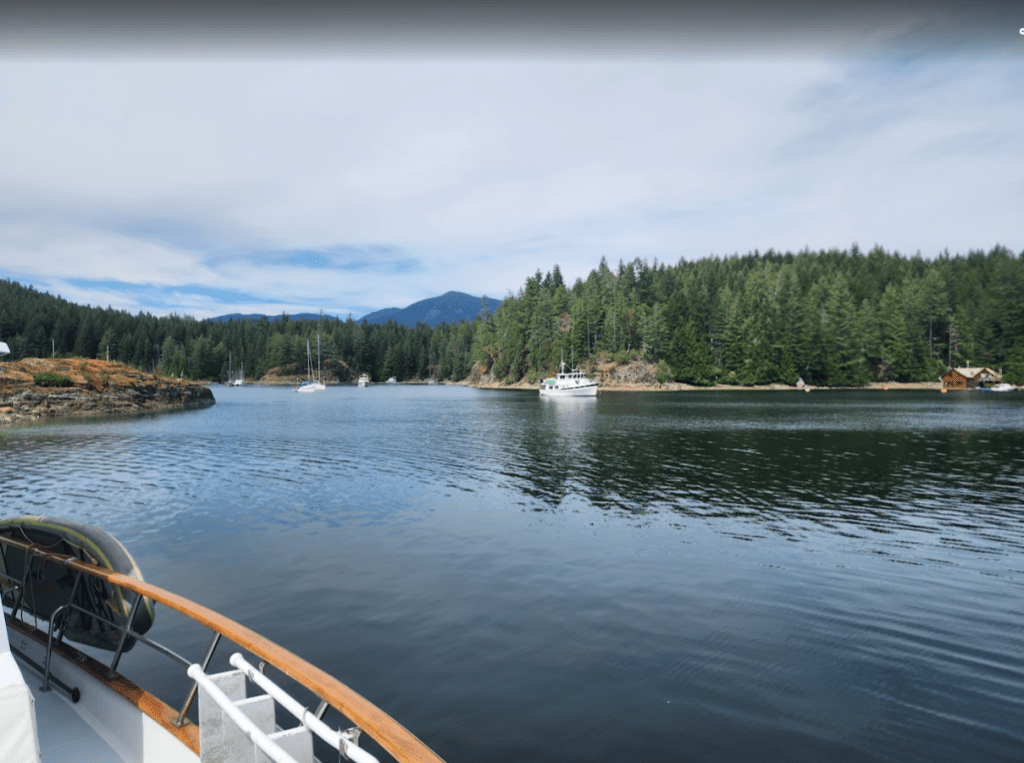
Our anchorage spot in the Calm Bay area within Squirrel Cove
Some of the sapien based discards that reveal how the contemporary non First Nations users of the Bay have transformed the ecological environment:
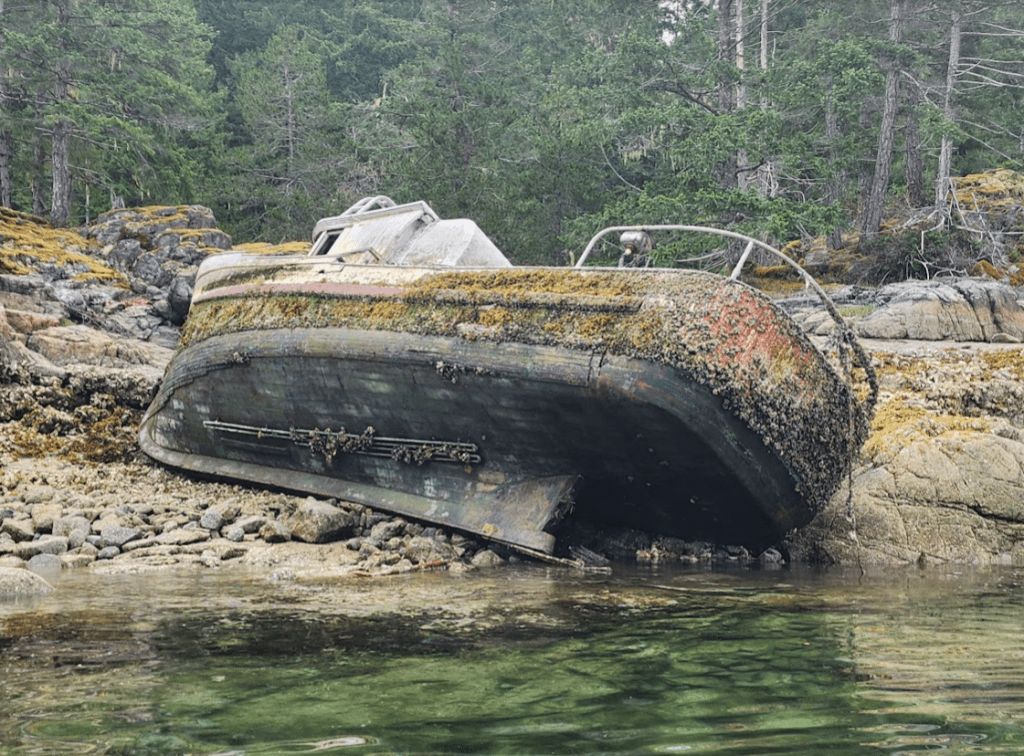
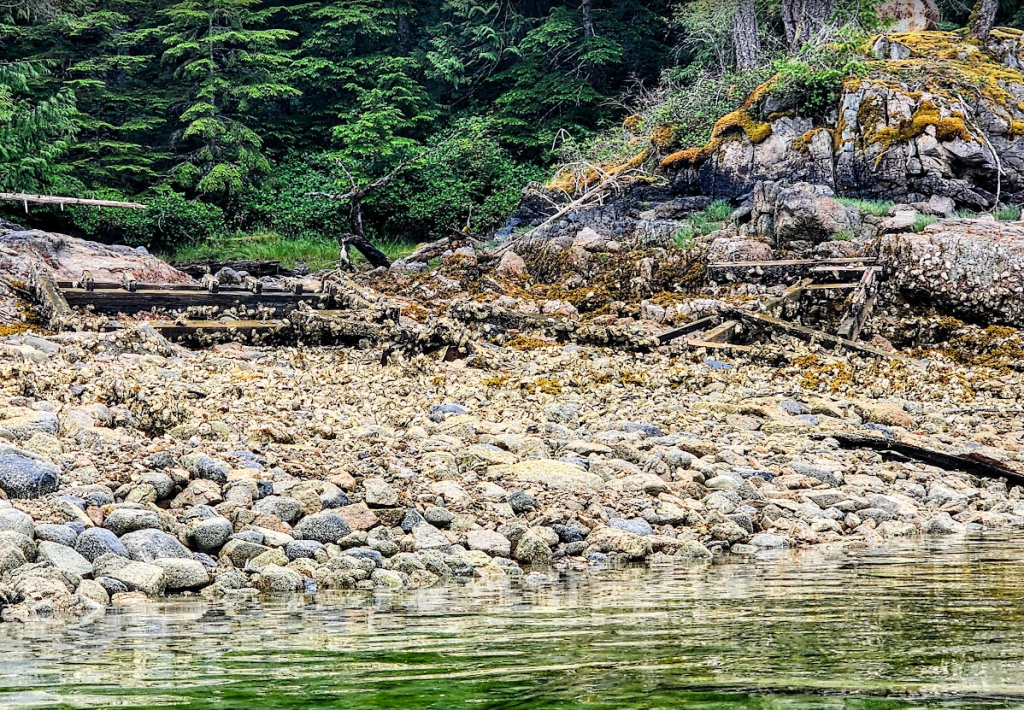
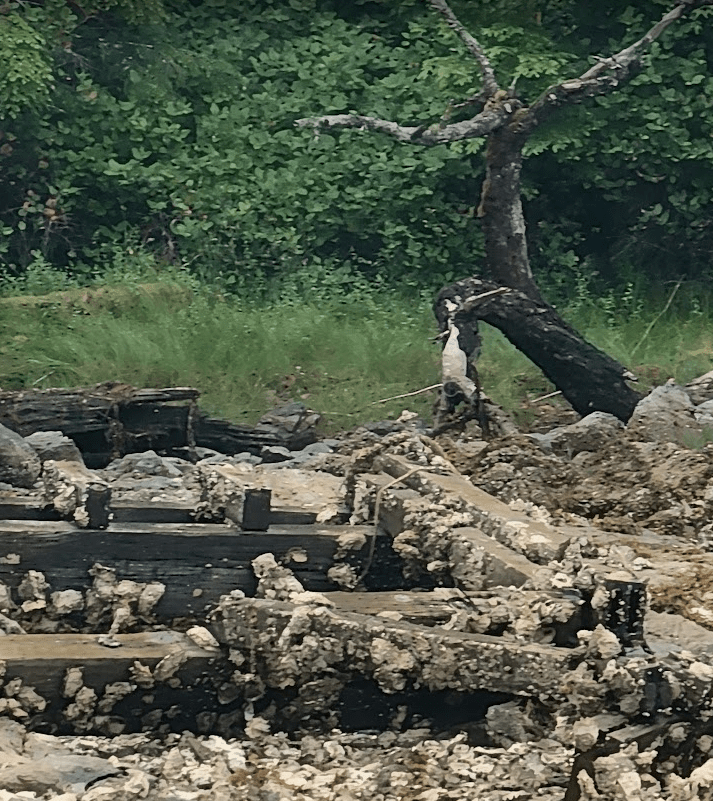
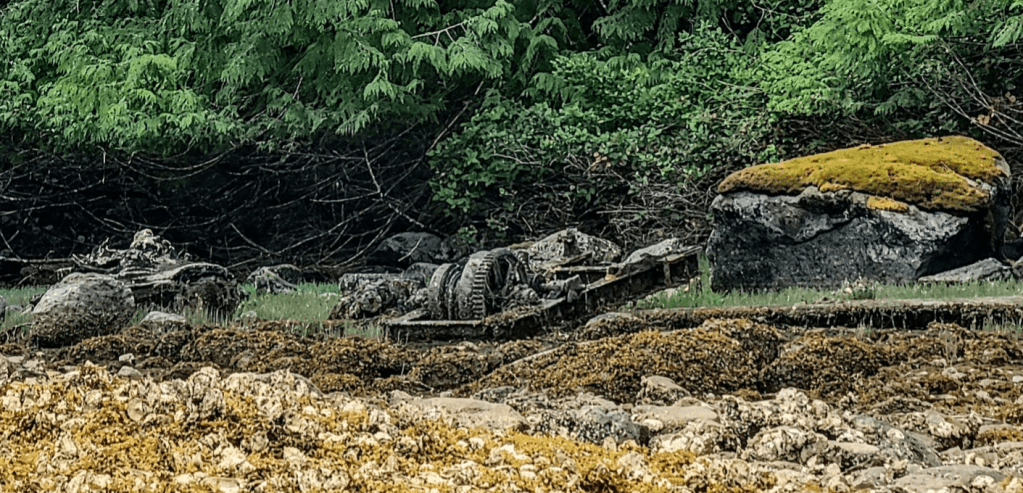
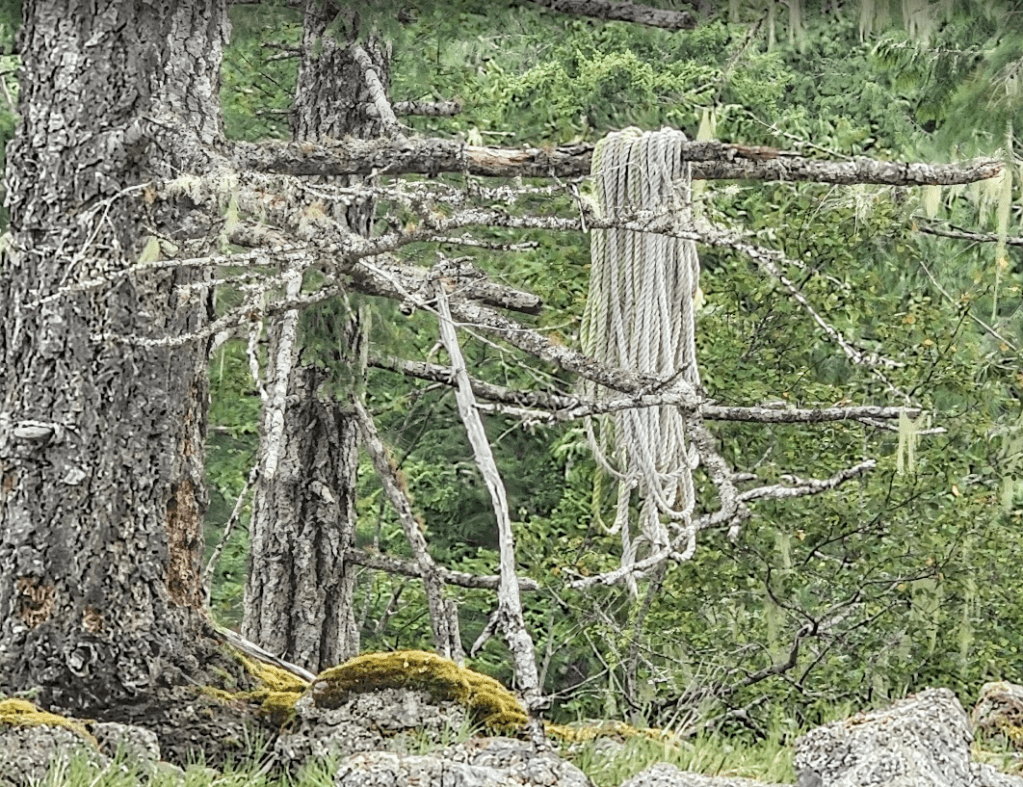
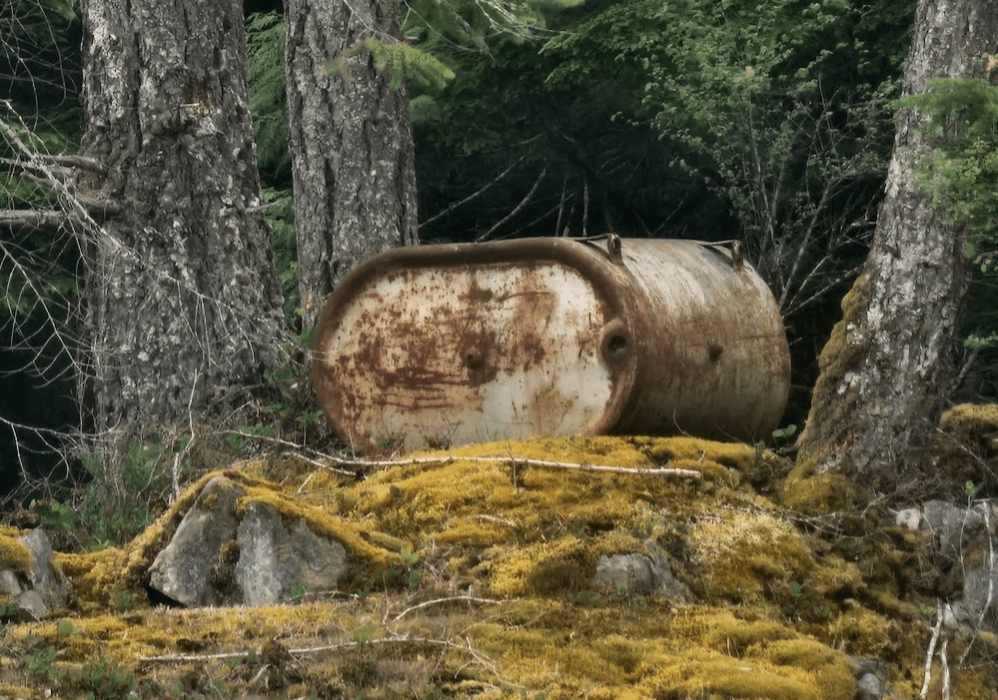
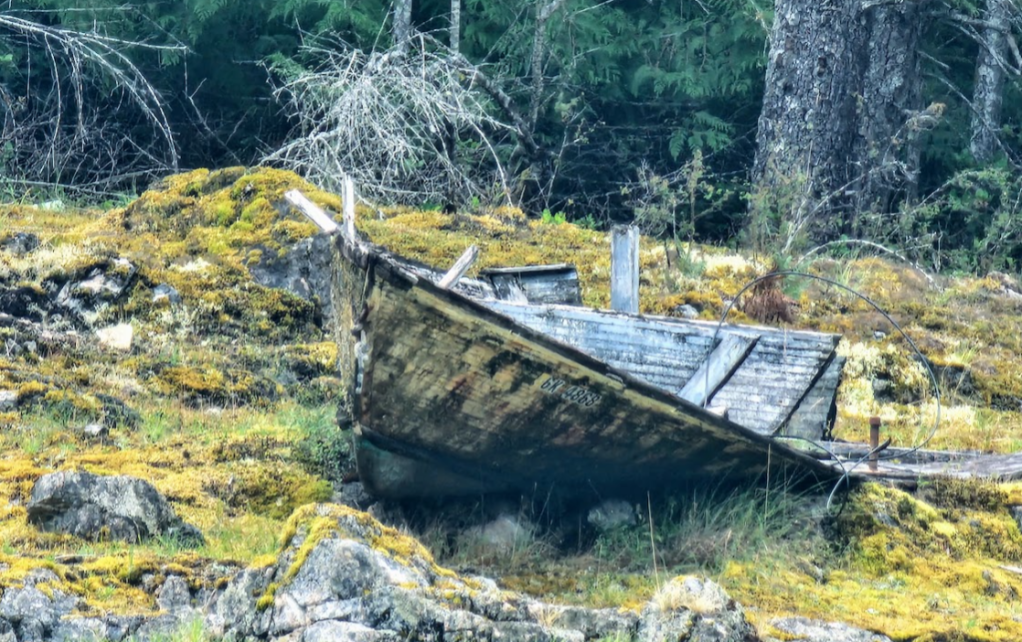
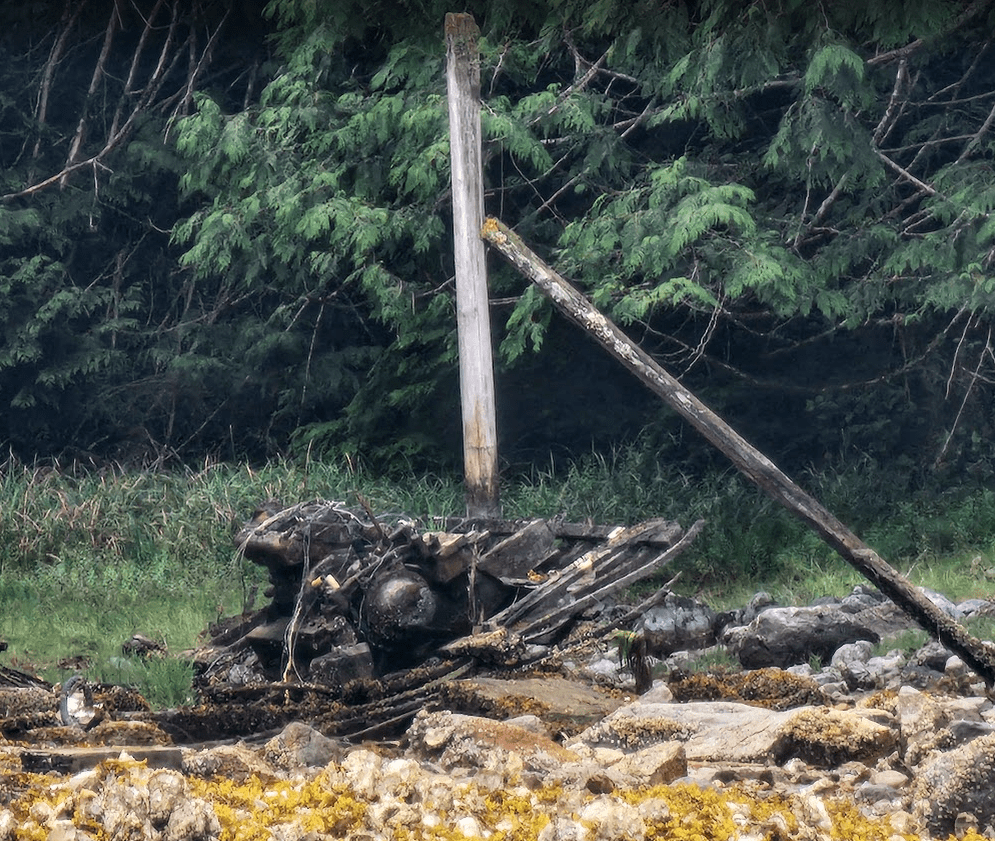
We really don’t want to talk about what Ludlow Bay used to be… or what it is now:
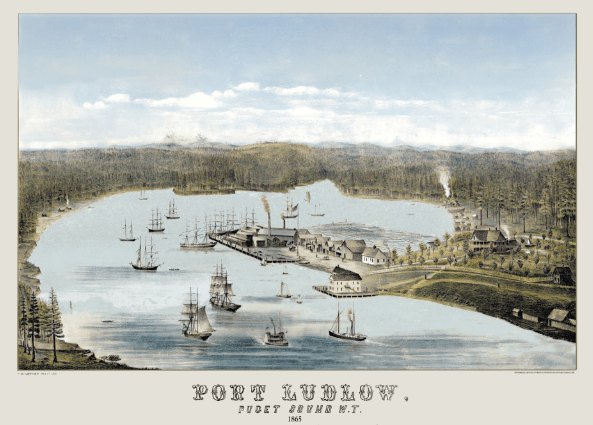
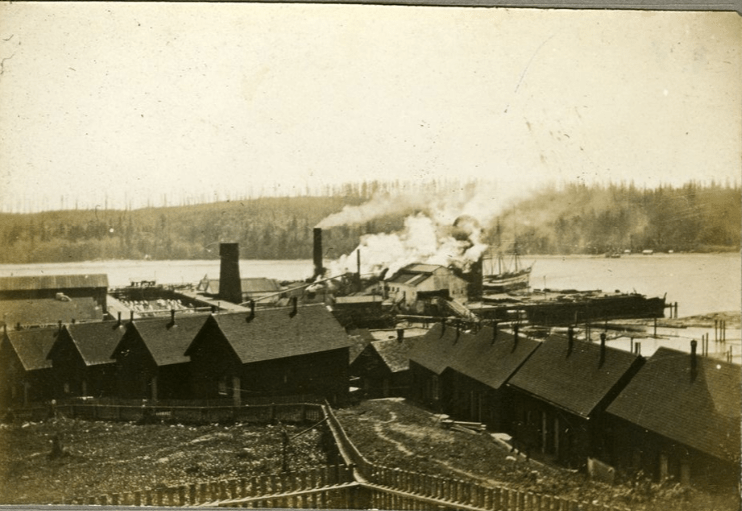
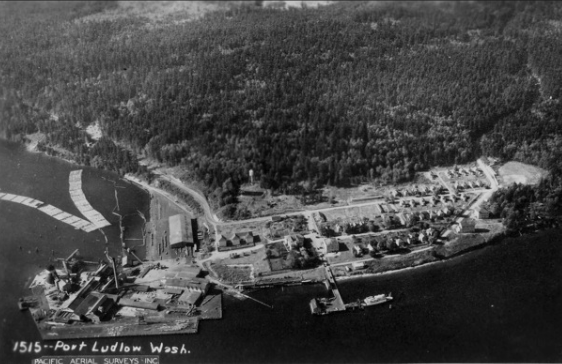
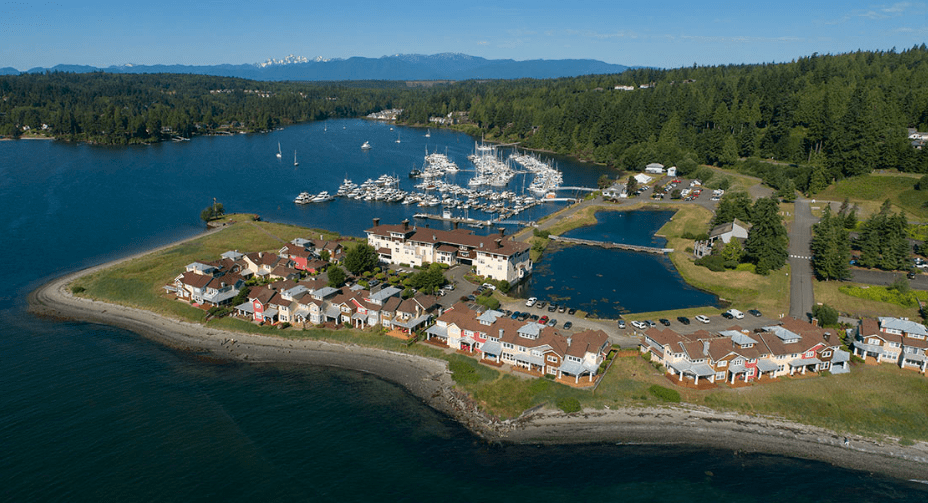
Compared to that history… Squirrel Cove is a pristine paradise!


