They have inhabited the planet for 25 to 30 million years. In the 1940s and until the 1970s, DDT nearly killed them all off. Once there were millions. Then just a few. Paving paradise and Putting in Parking Lots did have some wicked side effects for many. Birds by the millions were casualties. Insects were the target of DDT usage, but bees and oh so many other non-invasive and non-threatening creatures were eradicated. Many, but not all were classified as pests, and all paid the highest price. Ecologically, they all served a purpose and developed their intertwined niches over millions of years. The cormorants, and other affected creatures, for the most part… are back.
DDT is still used today, but only in a few countries (notably India, South Africa, and Zimbabwe) and strictly for malaria control under the Stockholm Convention’s limited exemption, and only for indoor residual spraying. I can only imagine that when being sprayed… some of it does escape into the outside environment. Why is it still used? It is cheap to produce. It is effective. Its residual effects last a long time. But that’s only an aside. The real story follows:
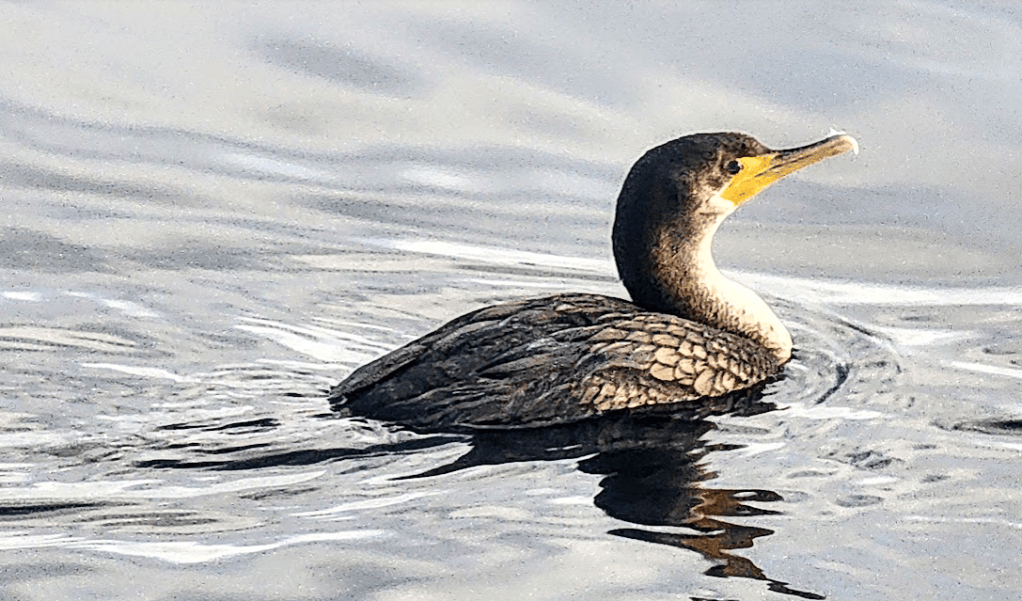
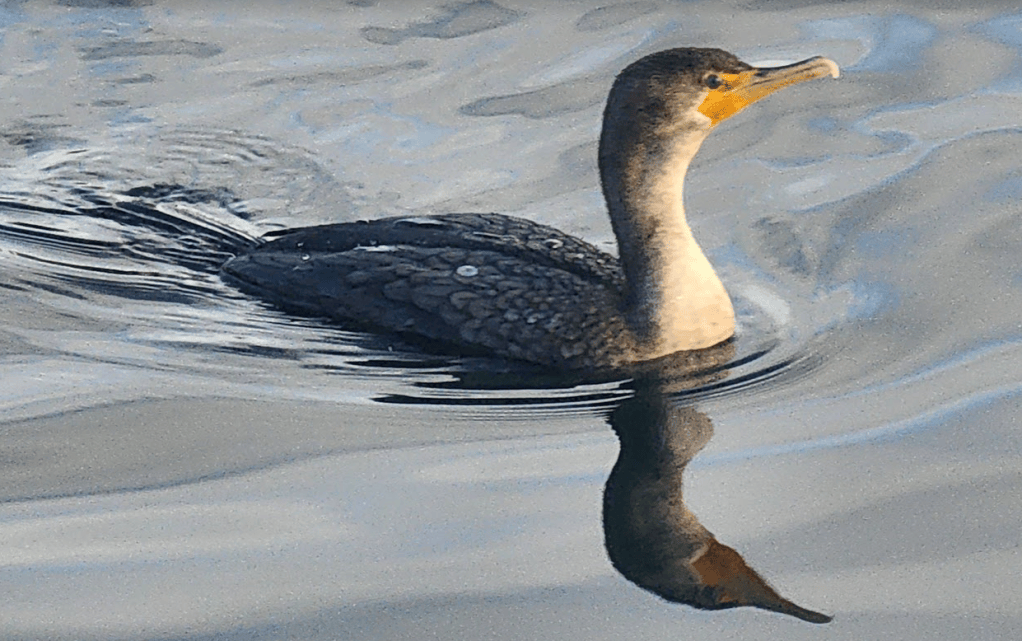
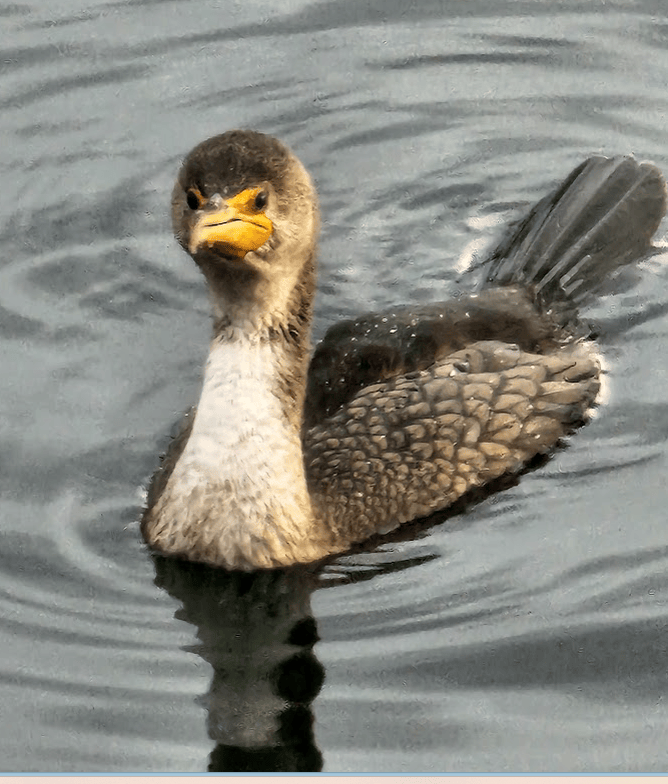
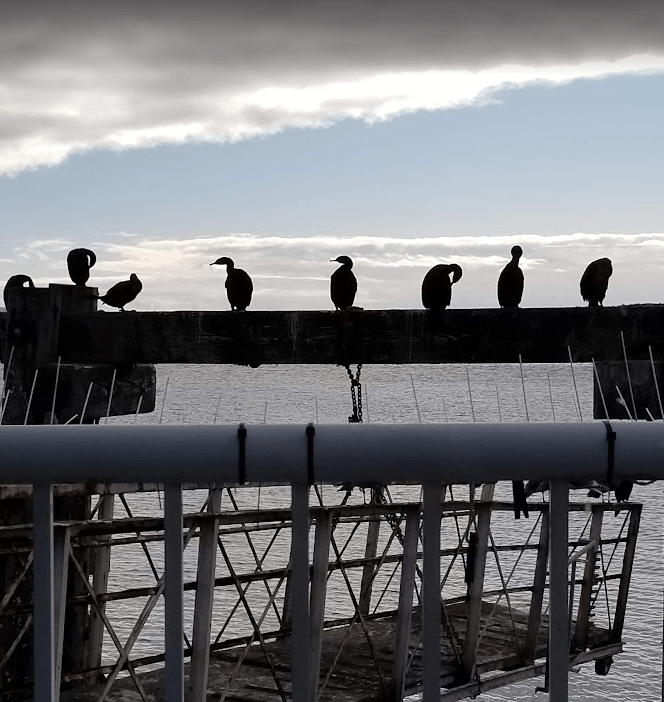
We winter in Port Ludlow. Throughout the winter we are visited by many cormorants. We see them swimming after fish, floating in a “gulp”, passing by in a “flight”, chasing each other in play, sunning to dry their wings, and teasing each other with what appear to be mating games. They are beautiful birds. They are also noisy, particularly where they roost. After watching them during the day, I always wondered where they go at night. Now I know.
Several years ago we anchored in Henderson Bay down by Olympia. It is a wonderful, good weather anchorage and is home to three notable species: A California Sea Lion rookery, a very large cormorant rookery, and sapiens in bayfront housing.
Over time, cormorants have developed two characteristics that decrease their buoyancy and make diving easier compared to other sea birds: Their bones are thicker, heavier and their outer feathers have limited waterproofing oils. That makes them streamlined bird torpedoes.
Most common cormorant species, such as the Double-crested Cormorant which are common in Port Ludlow, usually dive to shallow depths of 5 to 25 feet and can stay under water for from 30 to 70 seconds. Larger cormorant species, can dive much deeper and stay submerged far longer. The species diving range varies between 100 to 260 feet.
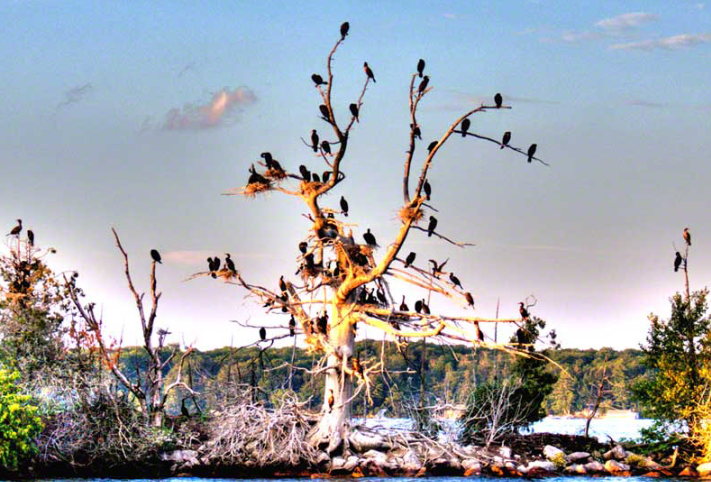
Where it becomes a problem for sapiens: They like to roost and nest in trees. Fir trees seem to be their preference. They are heavy and, since they have webbed feet, their landings can be clumsy. They roost in large numbers and their nests are very heavy. Their higher weight, the numbers that congregate together, and the weight of their heavy nests easily break branches in the trees. They also break off pieces of the trees to make their large nests. There is another twist: Their guano is very acidic. It kills ground vegetation and eventually… the trees they nest in.
As the trees and vegetation dies… they pack up and move to fresh stands of trees leaving deforested plots of land in their wake. That is the natural order of cormorant life and it developed over a very, very long time. It is not much of a problem for forests. After forest fires and cormorant roosting in their midst, they rebuild themselves. That being said, the foreshore areas that cormorants industriously denude can be… problematic for home owners, particularly those who live in in proximity to bays and seashore areas. A few examples of what happens to the trees are warranted:
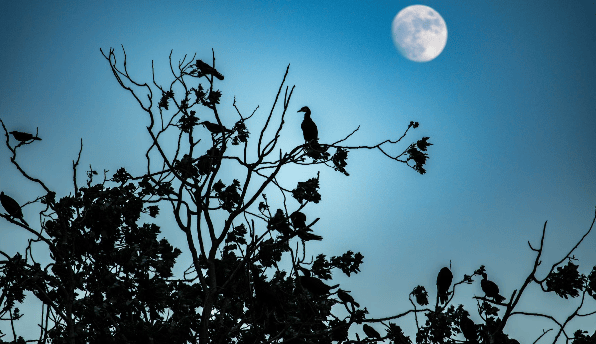
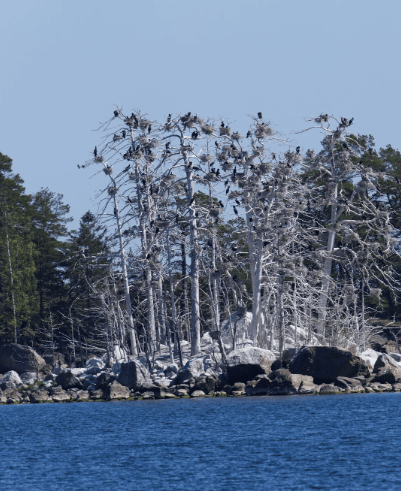
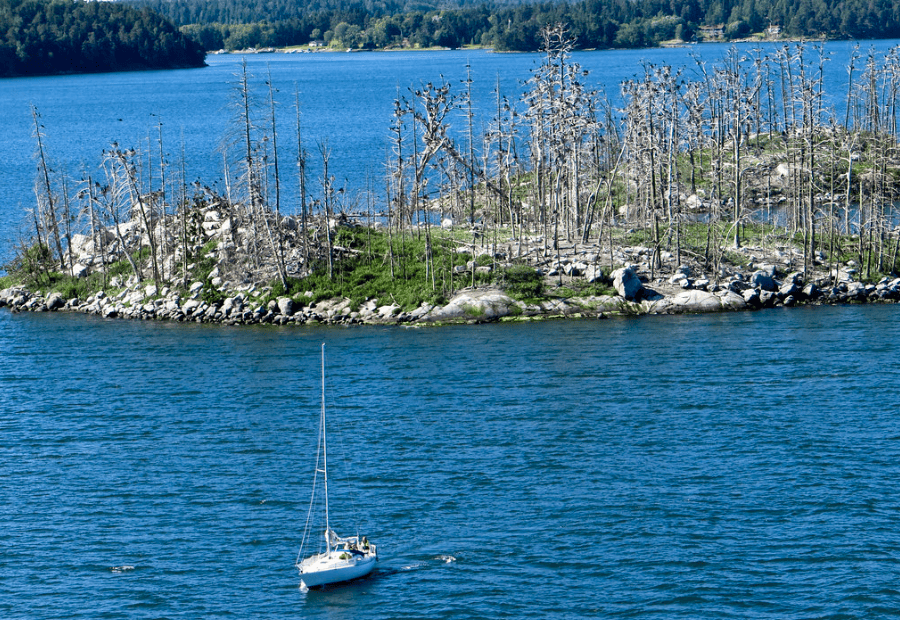
End stage:
I mentioned above that I discovered where the Port Ludlow cormorants nest at night. There is a short story to that. When we are not cruising the Canadian waters of the Salish Sea, we winter for a few months in Port Ludlow. This fall, the marina is having a large section of D dock replaced with new docks and electrical. They are behind schedule and our slip is not available for a couple more weeks. We’ve been anchoring out in the back bay area just outside a few islands that are called the twins. We noticed that there were cormorants roosting in the trees of the islands and surrounds. It’s hard to miss them. They are noisy and there are LOTS of them in the trees…
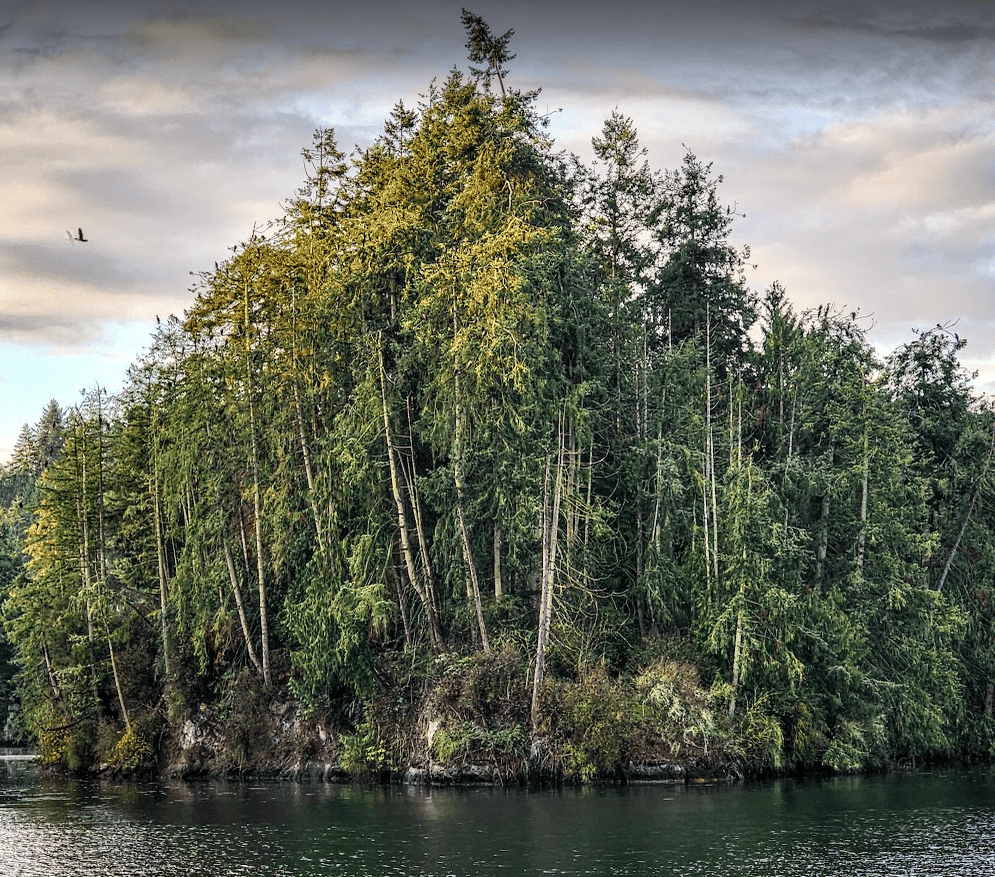
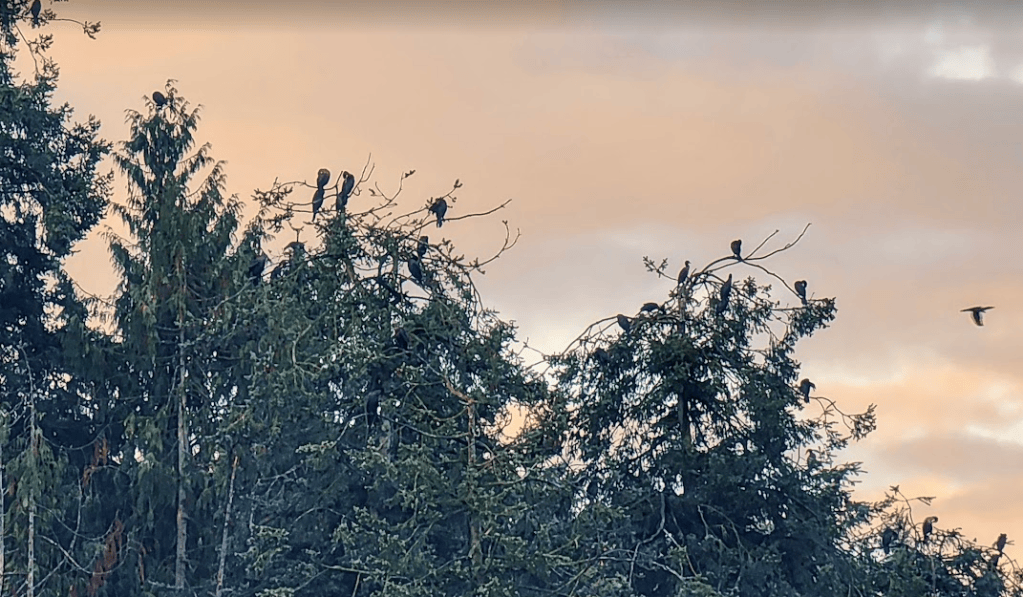
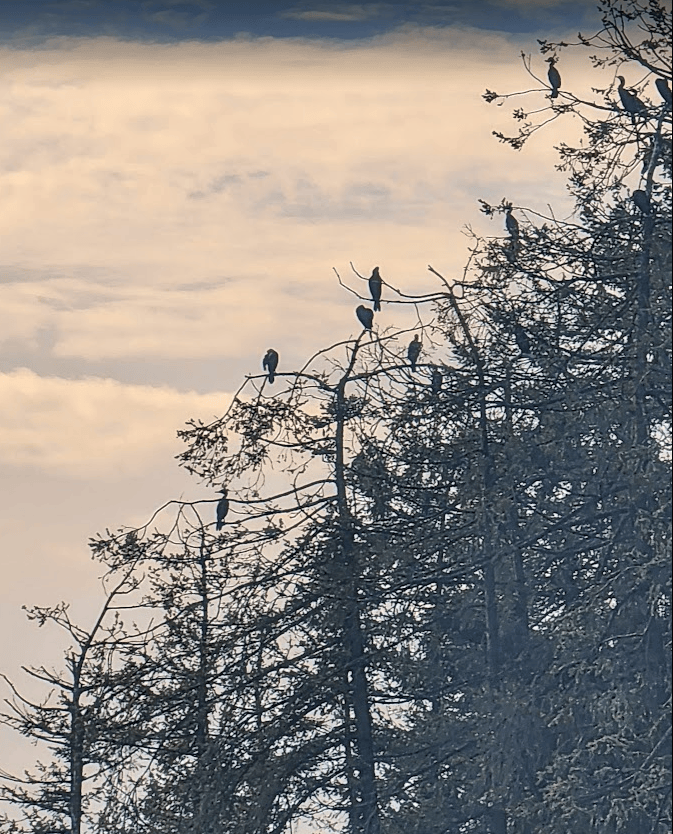
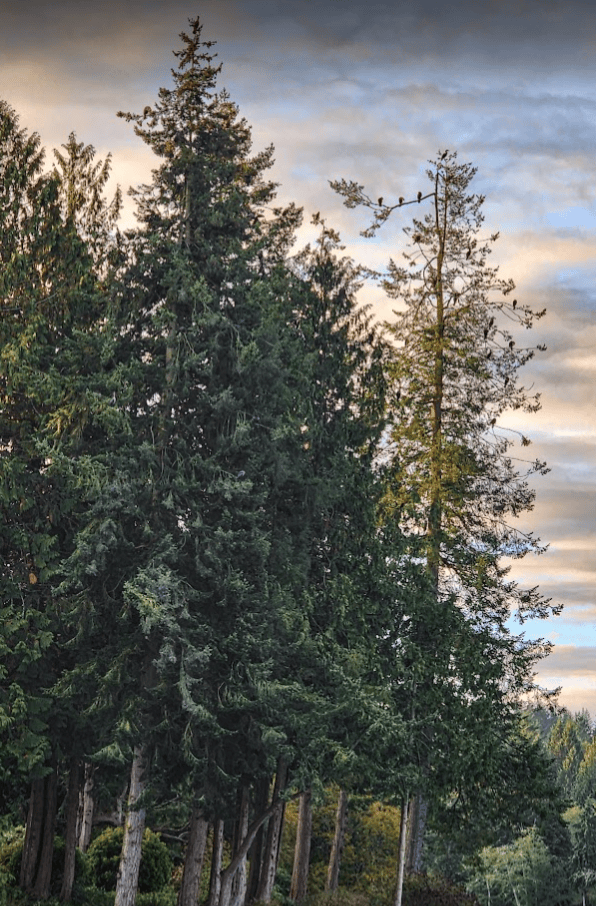
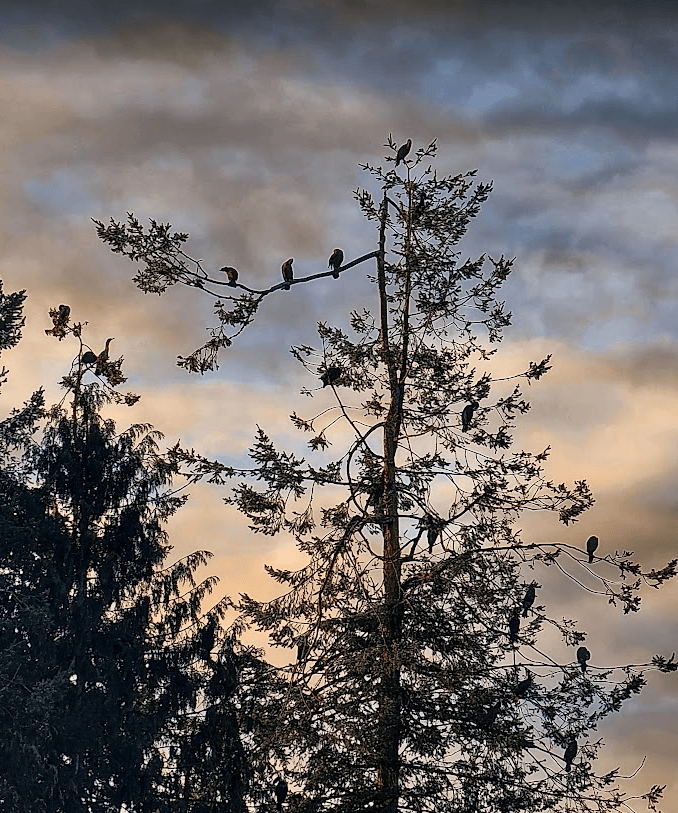
As I write this there is a steady stream of Cormorants flying from and to the Islands and close by stands of trees in homeowner yards. This morning we witnessed this flight of Cormorants circling their chosen island roosting area:
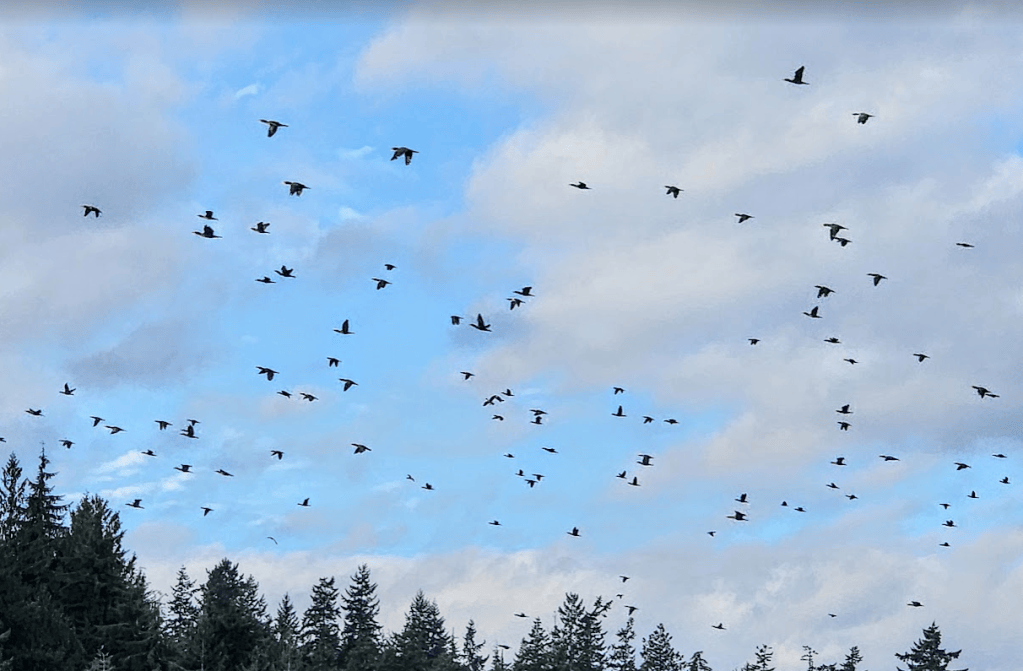
It is clear that Cormorants find Port Ludlow and surrounds to be an ideal habitat. There are fish aplenty, few predators, and ample trees to roost in and build nests. It is clear that their unintended, but lethal deforestation process is at hand. I assume the homeowners are aware… but the road forward to eliminate roosting and nesting Cormorants appears to be a tough ecological and environmental sell. Below are some of the federal and state obstacles:
Federal and State Laws on Cormorant Habitat Destruction and Control
In the U.S., double‑crested cormorants are federally protected under the Migratory Bird Treaty Act (MBTA), and any lethal control or habitat destruction must be authorized through a U.S. Fish and Wildlife Service (USFWS).
Federal Legal Framework
- Migratory Bird Treaty Act (MBTA): Prohibits the take, kill, capture, possession, or transport of migratory birds, including cormorants, without a permit.
- USFWS Special Double‑crested Cormorant Permit: Effective Feb. 12, 2021, this rule allows states and tribes to lethally control cormorants when nonlethal methods fail and there is documented damage to fisheries, aquaculture, property, or threats to human health/safety.
- Applicants must show that nonlethal control (e.g., deterrents, habitat management) is impractical or ineffective.
- Permits are time‑limited, specify allowable take, methods, and reporting requirements, and must be issued under 50 CFR §21.123
- Depredation Orders: Historically used to allow take in certain areas, but invalidated in 2016; now replaced by individual permits
- NEPA Compliance: The 2020 final Environmental Impact Statement and Record of Decision formalized the permit process.
State-Level Variations
- Permit Programs: Many states (e.g., Washington, Oregon, California) have their own cormorant management programs, often coordinated with USFWS. These may issue depredation licenses for documented fishery or aquaculture.
- Nonlethal Preference: States typically require nonlethal methods first, such as bird deterrents, habitat modifications, or predator control.
- Local Restrictions: Some states prohibit lethal control unless under a specific permit; others allow broader management programs.
Habitat Destruction Considerations
- MBTA Protection: The MBTA also protects nests, eggs, and parts of migratory birds, so destroying cormorant habitat (e.g., roosting sites) without authorization can be unlawful.
- State Wildlife Action Plans: States may list cormorants as Species of Greatest Conservation Need, requiring habitat protection measures.
- Conflict Mitigation: USFWS and states emphasize habitat management to reduce conflicts, such as adjusting hatchery release sites or modifying fishery access
- Compliance Steps
- Document Damage: Provide evidence of sustained economic or ecological harm from cormorants.
- Attempt Nonlethal Methods: Show that deterrents or habitat changes are impractical or ineffective .
- Apply for a Permit: Submit a request to USFWS or the relevant state agency, meeting all conditions in the permit rules.
- Follow Conditions: Adhere to permitted methods, limits, and reporting requirements; avoid any unauthorized take or habitat destruction.
In summary: Federal law (MBTA) and USFWS rules require permits for any lethal control or habitat destruction involving cormorants. States may add stricter or more flexible programs, but all actions must align with federal authorization to avoid penalties.
As I write this there is a steady stream of Cormorants flying from and to the Islands and close by stands of trees in yards.
I’m glad we live on a boat…


re: Nannopterum auritum
Interesting post. Cormorants are so common that I stopped giving them a second thought years ago.
I find it difficult to feel sorry for folks fortunate enough to own waterfront property where birds do what they have been doing long before humans decided that it is a problem. It is curious, though, how a web-footed creature adapted for swimming can mange to balance and maneuver and build a nest on a tree branch without full ability to grasp it. The fact that they end up killing the trees fairly rapidly also stands out because critters are usually in ecological balance with their environment. This in combination with cormorant’s poor flying ability makes me wonder if we are witnessing a recent evolutionary change that is still in the process of refining itself.
LikeLike
Agree. They do have claws that help them to grip branches… and since they’ve been living in trees a very long time it seems to work for them. I, as well, do not feel much sympahy for sapiens who believe that they are outside of natural processes. Lumberjacks do far more damage to forests then a few million birds. House values will plummet. Sapiens will demand a response and it will only mean an uplift in the persecution of cormorants, gulls, crows, all other seabirds and anything else that gets in the way of their expulsion and the retention of property value. Just as forests readjust when sapiens and other creatures that cause various levels of deforestation… they will adjust more rapidly as sapiens starve and kill each other en mass… Not that the extinction of Sapiens is at hand, and there are many clear warnings staring them right in the face… it is unlikely that they as a species will respond in ways that will ensure their future. Look at me for instance. I rove around in a diesel burning house. I surely burn less diesel annually than what heating oil is burned over the winter in many. many houses… yet I still am burning diesel… I’m not much of a good tree hugger… am I…
LikeLike
It’s fascinating to think that perhaps the balance achieved here (by cormorants who end up destroying their roosting trees) is that the area is sufficiently *moist* that there aren’t sufficient naturally-occurring fires to keep “refreshing” the forests, so a bird whose occupation will achieve the same function is a solution….
LikeLike