From early winter through mid-spring, we moor in a bay nestled against the remnants of a temperate rain forest. These were once old growth, virgin forests that the indigenous inhabitants once lived in and tended. Oh it’s not that bad really. Using the term “remnants” might lead one to believe that the surrounds are empty, vacant eyed, dustbowls… They are not. There are many trees left, but most have been relegated to tree farms and are nothing more than mono-genetic stands of harvestable timber. In the Northwest, Extraction has been the driving force behind development and “prosperity”.
According to the Rainforest Action Network and many other sources of forestry information, the last 200 years has been an era of unbridled extraction. Before European settlement, forests covered nearly one billion acres of the U.S. That has been reduced to 250 million acres or less of primary undisturbed, ecologically intact forest. Across the U.S., century-old forests now make up only about 7% of total forest cover. In the lower 48 states, roughly 90% of the original virgin forests have been cleared.
So… you might ask: “what’s that got to do with the price of fish”? Well…
The past few days we have been serenaded by a relentless soft, high-pitched, repetitive contact call made by a few small water birds that have been fishing close to the boat. It occurs in mid-April. I opened up the Merlin Bird app that can identify birds by the sounds they make and I found out that the birds making the chirp / peep sounds were: Marbled Murrelets. If you open the URL with a control / click you can hear a sampling of their repetitive calls: Marbled Murrelet Call
I hope you could open the link and hear the chirping… That is what they sound like when keeping track of each other The following snaps are what they look like when paddling about.
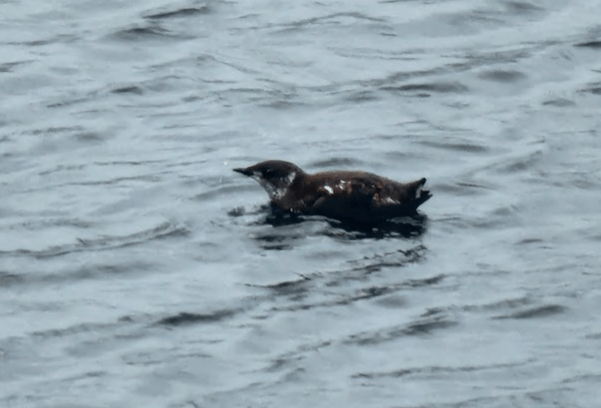
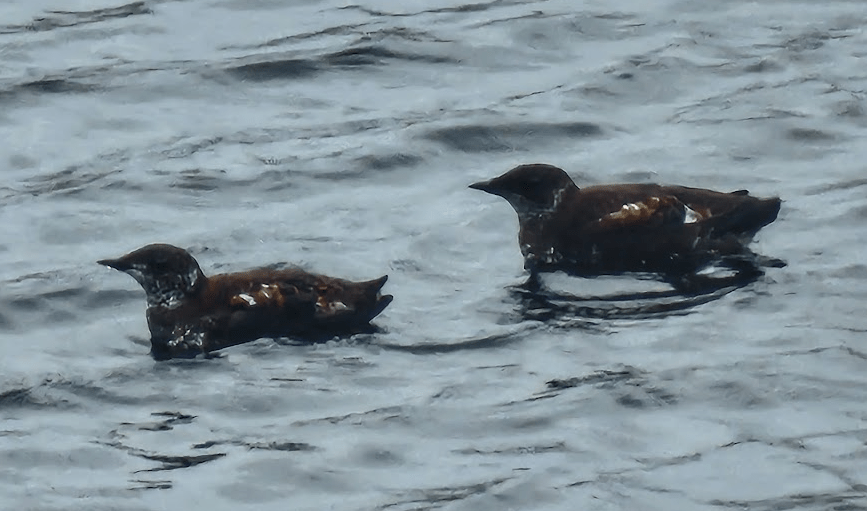
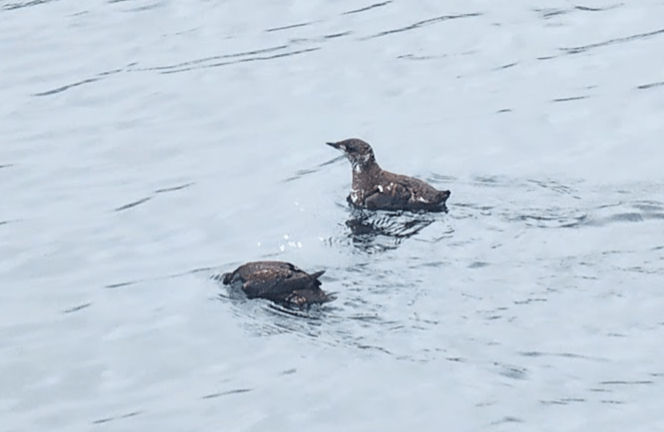
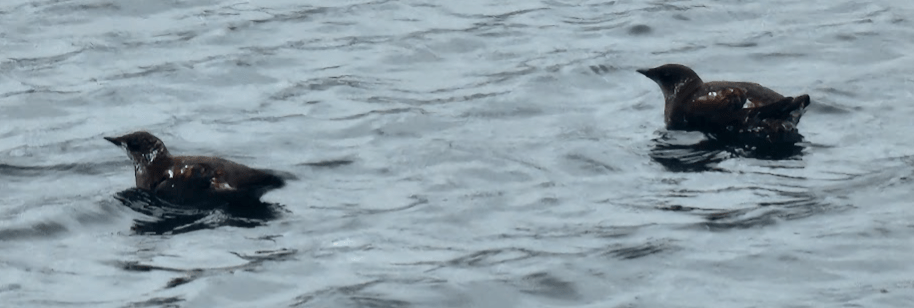
Let me return to the “discussion” above concerning the demise of old growth forests. I started this blog with that information because it has direct links to the Marbled Murrelet. They are members of the family Alcidae in the order Charadriiform. Those are all Auks or Alcids and include the murres, guillemots, auklets and puffins. Yes… they are all relatives of the Great Auk. You may recall reading about their extinction at the hands of sapiens in the 1840s or thereabouts. What makes them different and a bit peculiar for a seabird: They nest in trees. Not any tree of course, but trees that are covered in moss. That means old trees. Cut down the old trees and the little niffers have no comforting place to call home and… nest.
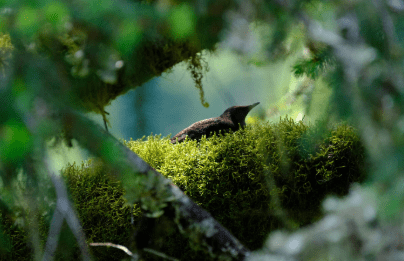
What are they doing just now in “our” bay. They are feeding on fish, courting and pairing off. They will soon mate and find a nice bough covered in moss… in an old tree, in a local forest. That is where they live when not feeding during late April through August doing their Murrelet thing: Hatching eggs, feeding chicks and continuing their life cycle.
Thought you should know…


